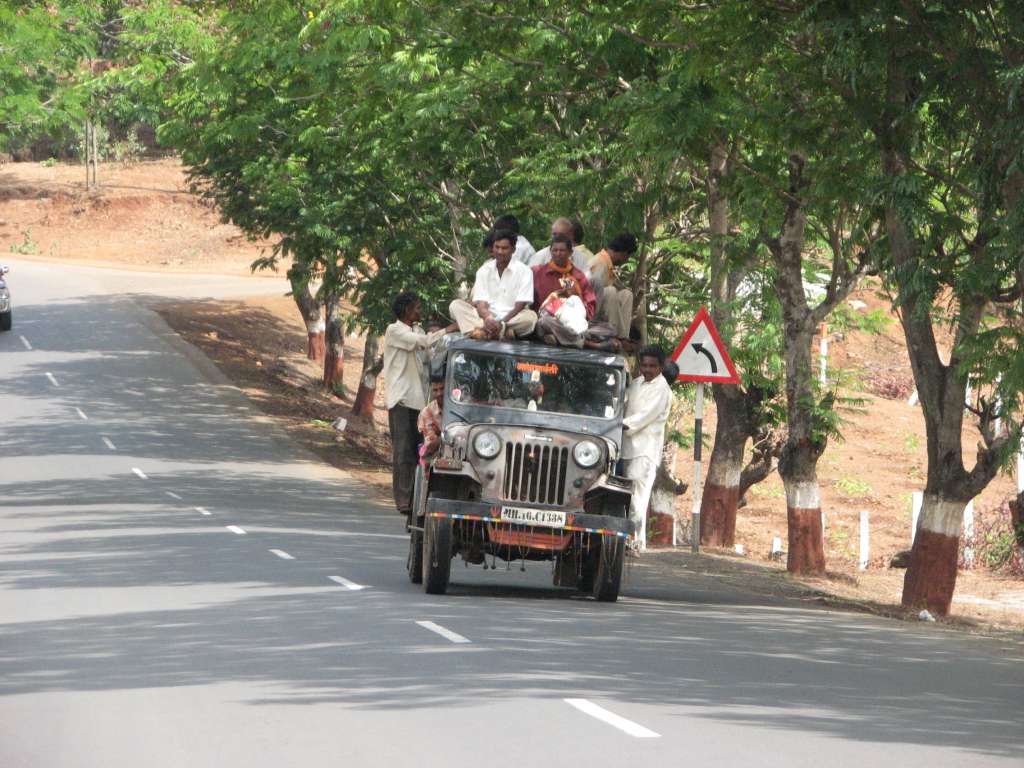
Because we enjoyed Vijay Singh Mankotia’s knowledge of the off-roads we asked him to suggest the most picteresque road to our 11th Mahindra Homestay location - Citrus County at Hoshiarpur and he chalked out a route via the Maharana Pratap Sagar Dam.
The Siwaliks in this region are soft and friable. These hills are composed mainly of clay sand, sand rocks and poorly bedded sandstones... and unless you go and touch the hard surface you would think they are sand dunes.
Harkreet Singh was among the first hosts to call us confirming our booking (over a month ago... before we left Chennai on this long Mahindra Homestays trip), and was impatiently waiting to recieve us. He was so eager to make sure we got there quickly that he sent his driver with his cell phone to wait on the highway to guide us thru the village roads. But, he forgot that the driver only spoke punjabi and we had no clue what he was saying!
So between the MapMyIndia GPS, calls to his wife Jasveen (who was in Chandigarh having just given birth to their second child) and some intuitive thinking we made it to the lovely citrus farm.
There was a choice to stay in tents in the lawn area or rooms in the main building... we chose the main building, for no particular reason. The tents were equally plush and airconditioned!
Despite the heat - the monsoon not having arrived as yet, the place was pretty cool, thanks to the powerful air conditioners. The home is set in the middle of a Kinnow orange farm and in the evenings it got pretty cool thanks to the large lawn and huge trees.
The kinnow, a hybrid of two citrus cultivated varieties, was introduced from California to the Punjab in the 1940s and is known for its high juice content, special flavour, and as a rich source of vitamin C.
In Punjab, every this in King size... the rooms are big... the air conditioners are over 2tons, the tents are spacious, and the TV in our room was 29 inches... no wonder their IPL team is called Kings XI!
We were joined that evening by Jaideep and Pooja from Chandigarh who had just returned from a trip to Australia and wanted to experience “Punjabi Homestay/farmstay before getting back to full fledged work”.
Jaideep also happens to work with Indo-Asian News Service (IANS) and decided to spend his weekend writing about us and our travels. The article was carried in some 20 newspapers all over the country.
Jaideep, who had been here before, took us around the area and showed us a factory where they made sarson-ka-saag (Curried mustard leaves) and makkai (corn) flour for export to the millions of punjabis who lived in UK.
We got to eat some great tandoori chicken and paneer butter masala - the signature dishes of punjab at the airconditioned little tent called the Citrus cafe.
Harki and his dad were always around to tell us tales of Punjab, the politics, the culture and the religion. Food and cars were the other favourite subjects... and Harki’s dad had a good joke up his sleve all the time.
Rufus, the family pooch, is always around to entertain and eager to play... when he was not sticking his face in to the swimming pool to cool off from the heat.
After 2 days of King size hospitality we all headed to Chandigarh, Harki to see his wife, Jaideep to get back to work and Prabha and I to start the first leg of our long drive back to Chennai.
Our 10th Mahindra Homestay was Jaishree & Vijay Mankotia's Om Mahal in Kangra valley near Dharmanshala.
Crossing Shimla is such a pain. The traffic is unbearable and despite helpful cops standing at every turn we took a good one hour to get out of the maze. Since we were 'inside Shimla' now, we decided to pay a visit the dear old Peterhoff Hotel. In 2004 we had come to this heritage hotel to get flagged off on the Raid de Himalaya.
From Shimla the road is pretty straight to Gaggal... just stay on NH 88. We took a couple of detours because of landslides (yes... even in the summer these things happen) and sometimes because we felt the off-road was more picturesque than the highway. We finally reached Gaggal (via Bilaspur, Hamirpur. Jwalamikhi and Kangra).
Om Mahal is pretty easy to navigate to. When you drive from Gaggal town towards the airport (a.k.a. Pathankot road) take the left that points to Masroor monolithic rock-cut temples and keep going for about 5 kms. There are no boards so if you request Jaishree Mankotia she will send someone to the main gate to guide you into the estate.
When we entered the mango estate the trees were full of ripe mangoes, ready for harvest. And hidden between them were some Lychee trees.
So, you ask... were the next 3 days spent eating mangoes and lychees? Yes... and many more nice things... all while we looked at the Dhauladhar range of the Himalayas.
We asked Jaishree to prepare simple dal-chaval type of meals but she would sneak in one of her specialities in to the menu and we ended up over eating - as usual!
Major Vijay Singh Mankotia, is an officer, and gentleman... not to forget his roots in royalty and politics.
Mankotia is a member of one of the princely families of Himachal Pradesh. At the Indian Military Academy he was awarded the coveted "Sword of Honour", and served in the Gorkha Regiment with distinction. After a premature retirement from the army he entered active politics, where he is remembered as one of the most versatile Tourism Ministers of Himachal Pradesh. Unable to fight the deep rooted corruption in the system for long he has today “quit active politics and decided to relax, catch up on my reading and meet interesting people like you...” he says.
The atmosphere at Om Mahal is spiritual - there are pictures of the Dalai Lama and Swami Chinmayananda all over the house - some of the pictures are with the Mankotias... “our family has been associated with all things spiritual for generations and we continue the tradition” says Jaishree.
There are certain advantages of being the guests of the former Tourism minister - you get to know of the off-roads to take and the best places to see, especially if you are short on time.
The next day we took a quick drive to Norbulingka, a school of Tibetian art and craft, dedicated to preserving Tibetan cultural heritage, located in small village Sidhpur near Dharamsala. Mankotia charted us of a “nice forest road” that was really beautiful... especially because the entire dharamsala - McLeodGanj area is crowded with Tibetans and tourists.
The art and craft on sale at the Norbulingka store is prohibitively expensive, but I guess you have to consider the fact that they are trying to support about 1,50,000 refugees and run a government in exile... so we did our part for the cause and picked up a few souvenirs. Incidentally the original town of Norbulingka is in Tibet (now under Chinese rule) and used to be the summer palace of the Dalai Lama.
While the Tibetians are very strict about the teaching of the traditional wood and metal carving techniques, they have given in to the western influences as far as the music their younger generation listens to - the Norbulingka class rooms were echoing with Britney Spears and Shakira.
The 6 o clock aarti and bhajan at the Swami Chinmayananda samadhi was our next stop. Memories of my first school in Kurnool came to mind as I joined in the bhajans, remembering a verse here and a phrase there. Some of the bhajans prayed to the gods to give the parched lands some rains. After the aarti, as we prepared to take the prasaadam it started raining, a fabulous hail storm.
Everyone was overjoyed, some started collecting the large ice cubes and eating them. A few of the devotees stayed back to chat with us and we also had the honour to meet Dr. Kshama Metre, Director of Chinmaya Organisation for Rural Development who was recently awarded the Padma Shri Award for Social Service.
The next day we decided to go to Dharamsala and McLeodGanj to see the Dalai Lama's personal Namgyal Monastery. The main teaching room of the Dalai Lama is located here and because he was out of the county the palace was not crowded.
We had lunch at the small Namgyal cafe which served some tibetian soups and italian pizzas. There were many monks wandering about in their dark maroon robes and shaven heads. Unless you paid close attention to what they were saying you could not tell if they Tibetin, American or Indian.
Thanks to Richerd Gere and the his charm in the western world a lot of Americans and Europians are actively involved in the support of the Tibetans... some of them have even taken to the robes.
The narrow mountain roads all the way from Gaggal to McLeodganj and back were a breeze for the Xylo... drives like a car, climbs like a SUV.
Back at Mankotia's place (or Palace if you like) the rooms were very comfortable and thanks to global warming they had just added their “first set of Air conditioners... just this year... it has never been this hot!” according to Jaishree.
The house is filled with family pictures and memorabilia from Vijay Singh's many travels. The library boasts of books from Archies digest to Enid Blyton to the teachings of the Dalai Lama or the collectors edition of the Encyclopaedia Britannica if you like!
Wandering about the estate, we spotted the elusive Yellow billed blue magpie, several bulbuls and treepies all over the place. True bird wathcers paradise.
The silverware is actually made of silver (... not stainless steel), truly royal. The behaviour of the staff and the presentation of the meals, even if it is a simple chai with biscuits, is just as royal. We were the first Mahindra Homestay customers to come here, maybe the first ever guests they have had since they started the homestay so we felt we were treated morel like family than guests.
“If all the guests we get are like you, I would be very happy” said Jaishree as we left the next day on our way to Hoshiarpur to stay at our 11th Mahindra Homestay location - Citrus County.
Our 9th Mahindra Homestay, Krish Rauni at Matiana, is located just off the highway (NH22 - a.k.a. the old Hindustan-Tibet road) and has a beautiful view of the valley.
The first thing Kishore asks us when we call him to ask for directions is “Do you want to climb 100 steps or walk 100 steps on plain ground... from the car park...”. Needless to say, after the exhausted drive from Corbett we opted for the plain ground walk, we were not taking chances at 8000 ft. above sea level. But what thrilled us even more was the fact that we were going to be staying in the middle of an apple orchard.
 Krish Rauni was among the busiest homestays that we had been to so far. Kishore and Shobana are great hosts and despite having 3 other rooms booked when we were there took good care of everyone. Everyone got their privacy and everyone got their attention. Kishore is great fun and has a very interesting humorous story to tell every few minutes. Shobana is a great cook and her paneer is among the best that I have tasted... fresh, soft and cooked just right.
We reached Krish Rauni in the middle of the biggest annual event of the little village... the local deity was being escorted back to the temple in the next village after spending the last 24 hrs a temple just outside gate - where we had parked our Xylo. We were lucky enough to get a glimpse of the deiety - “very auspicious” we were told.
The rooms are very comfortable and even had a balcony that overlooked the valley... better than and LCD screen for entertainment I must say. There was a TV in the rec-room but we did not even switch it on... we were too busy playing carom.
Most of the meals were served on the terrace which over looked the apple orchard and was arms length from a nice apricot tree. We got to eat apricots for breakfast lunch and dinner. The terrace was also the centre stage for most of the activity here. We spent most of our time and Kishore and Shobana made it a point to introduce each of their guests to each other and made sure every one was chatting up like one big family.
One excursion we went on was to Hatu peak - the highest peak in that area. at 11152ft it was supposed to “quite a dangerous drive... but for you folks it will be nothing... you have driven all the way from Chennai... and across the Chakrata, Tuni road... this is nothing... “ said Kishore as he explained the sights around the place. Our Xylo took the narrow road in its stride with ample room to help other cars pass too!
He also had a very interesting story to tell of a certain dentist in the nearby town of Theog Padma Shri Dr. Rajinder Singh. Apparently Dr. Singh had been awarded the Padma Shri for his skills in speed typewriting and not in dentisry... “Good thing I got to know of that fact before I opened my mouth to him... my wisdom and wisdom tooth... both are safe today” jokes Kishore.
Matiana is also the place where the various Indian sports teams come for high altitude fitness training before they head off to international competitions. Needless to say the area is also famous for the apples... that keep the doctors away.
With a belly full of a great breakfast and a basket full of fresh apricots we headed off to our 10th Mahindra Homestay, Om Mahal in kangra valley near Dharmanshala.
There are many roads from Uttarakhand to Himachal... and we decided to take the most difficult of the lot to reach our 9th Mahindra Homestay, Krish Rauni at Matiana.
We left Camp Corbett at Kaladhungi after lunch and thanks to a board I saw at the Ramnagar entrance to Corbett National Park we took a road that was on the southern fringe of the park (via kashipura, Afzalgarh, Nagina and Najibabad). We got fleeting glimpses of some birds and wildlife as we drove to Haridwar for the night. After finding that the rooms at Ginger were dirty we stayed at a very decent Hari Heritage.
The next morning we continued on NH 72 to Dehradun, and beyond. In Dehradun we took a break to pick up some wildlife books at The English Book Depot on Rajpur road, and some great hindi MP3 cds in the market near the GPO.
From Dehradun we could have taken the 'plains' road to Chandigarh (via Herbertpura and Narayangarh) and reached Shimla via Parvanoo. But we chose to climb the Himalayas (again) and Herbertpur and head north on NH 123 up to Kalsi and then took the road to Tuni (a small non-descript town near the Uttarakhand-Himachal border on the Tons river) via Chakrata.
A good part of the last leg of the day was done in pitch darkness. Thank goodness for that.. the narrow roads and the cliffs were beginning to scare me... in the dark all I could see was the white marker stones on the cliff side of the hill roads and I felt secure... what you can't see can't scare you... right?
We found a small hotel (3 rooms only) in Tuni, who served us some rajma, roti and chaval for the night and gave us a decent room to rest our backs in... amazing that we actually found that place in the dark.
Uttarakahand has a lot of power problems and sometimes in these remote villages there is no electricity for at least 3 days.
The next day between landslides, dangerous cliffs and lovely birds we took off to Matiana. A few meters after we crossed the Tons river, which is the largest tributary of the Yamuna, we were in Himachal Pradesh.
The roads got better (but still had it's share of landlsides)... so we reached Matiana (via Hatkoti, Jubbaland & Theog).
In Himachal, the best part is that you get to see apple orchard on the road sides and... in season... you can pick as many apples as you want and nobody cares!
We stopped for a breakfast of samosa and chai and one small village... probalby just a few hundred people. Two young boys were staring at our car... the number plate... us... and wondering “where the hell have they come from”. Finally they asked us and when we said Chennai... they had no idea where that was!
We tried to explain, Chennai also known as Madras, samandar (sea), south india... nothing seemed to ring a bell... and then all of a sudden his face lit us - “Chennai Super Kings” he yelled.
Wow! The first real good and useful thing that has come out of the IPL... it has improved the general knowledge of the kids in these remote places.
Because it was not yet apple season we decided to eat apricots - hundreds of them... little did we know that when we reached our 9th Mahindra Homestay, Krish Rauni at Matiana, we would have Apricots for breakfast, lunch and dinner.
Driving to 8th Mahindra Homestay destination Camp Corbett at Kaladhungi from Nainital was a mistake... after enjoying the cool weather at an elevation of 2000+ mts... we drove down the hills to Kaladhungi (at just over 400+ mts)... the heat was unbearable. In a way the mistake was from our part... we should not have been there during the hot summer days.
The drive itself was great. These Sivalik Hills are the southernmost mountain chain of the Himalayan System... and probably the youngest. We stopped for some tender 'butta' (corn-on-the-cob) on the way and enjoyed the drive along the ‘long and winding roads’ in the hills passing the many lakes that dot the hills... this one called Khurpa taal really looked like a big emerald!
Ome and Suman's Camp Corbett is located right on the mail road... can’t miss it... there is a nice small board that points to the place. Suman had told us that she would be busy “doing our bit for the community”, by organising a free medical camp for the local villagers at the Corbett museum... so after a quick wash we went to see what that was all about.
At the Corbett Museum, we got a quick history lesson in the man the world knows as the greatest British-Indian hunter, conservationist and naturalist, famous for slaying a large number of man-eating tigers and leopards in India. Fresh from all our reading on Corbett at “The Hive”, we were able to identify the incidents referred to here. Like any good tourist we picked up a lot of Corbett souvenirs... and pickles by the locals.
The Neema doll - made from Saan fibre (a type of hemp) - is the result of a project by Frederike from France who is working with villagers from the nearby Ringora village. This project helps the locat villagers earn money and keeps them away from the forest thereby reducing the man-animal conflict.
The rooms at Camp Corbett are pretty comfortable. The cottages are like a resort... few and far apart giving us the privacy that we need but at the same time the dining area and kitchen are away from the rooms. “We already have so much wild life, we don't want pests to come here too... that is why we prefer not to offer room service”, says Suman.
All the rooms have air-coolers which kept the heat off marginally... but the whole place cooled down tremendously at night... got quiet chill actually.
 We spotted the beautiful Crimson Sunbird near the central lobby-hut and several other lovely birds... may the pictures speak for themselves.
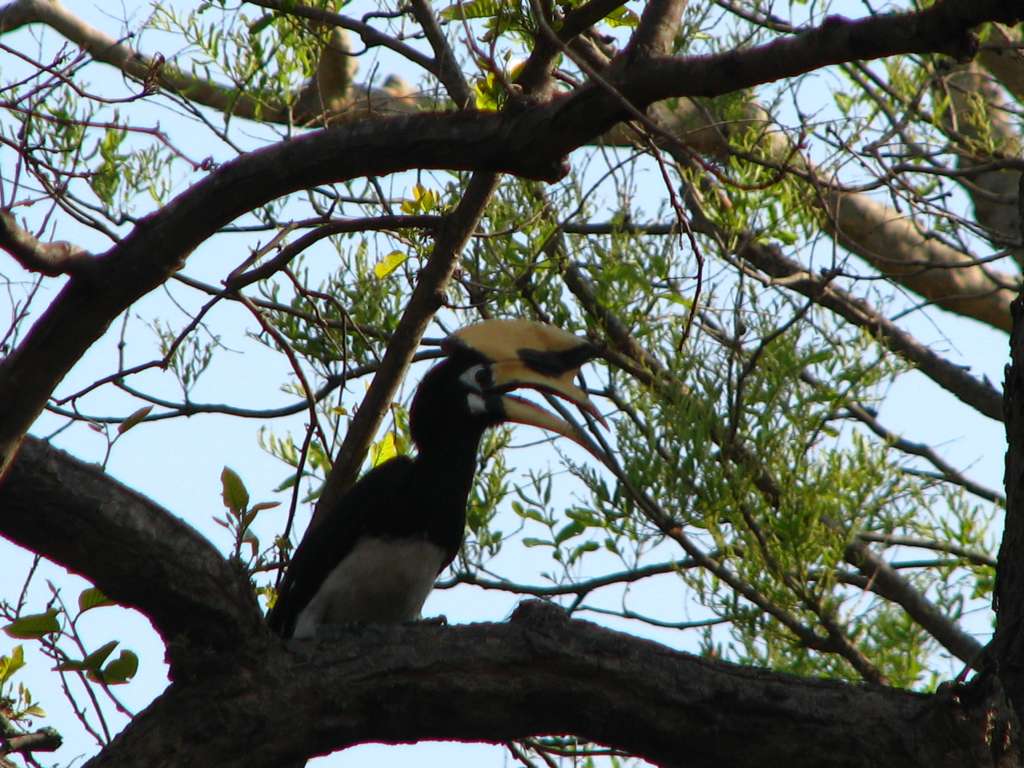
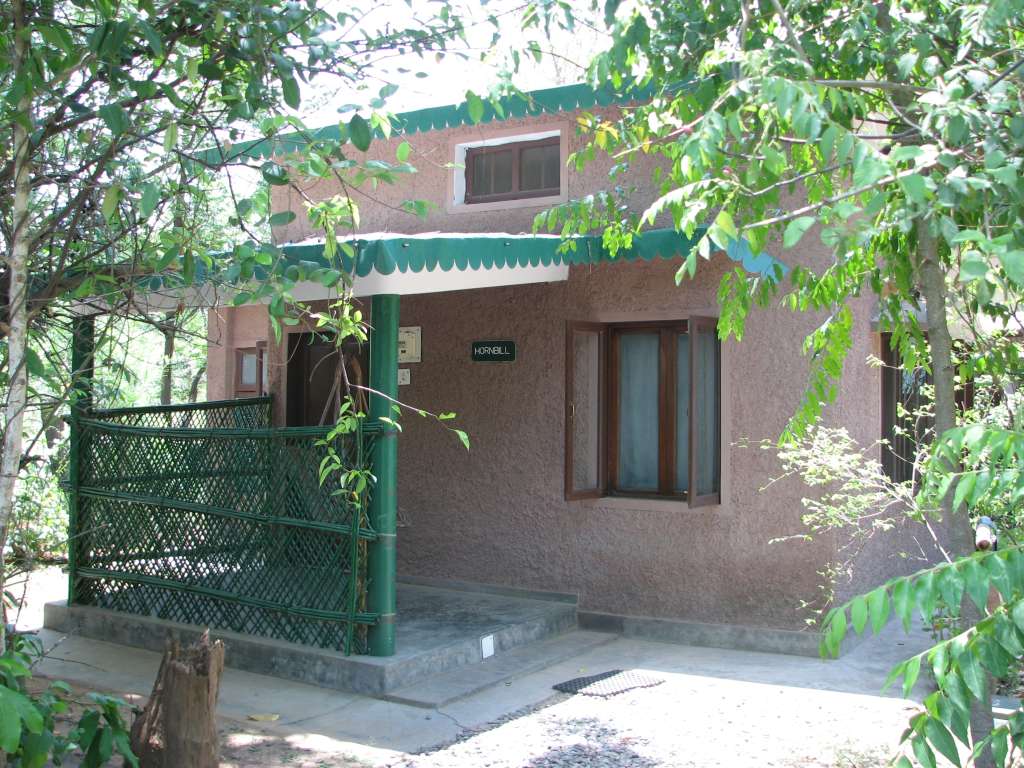
The next morning we were booked for a safari at the most famous tiger reserve in the country - Corbett. We spent 4 hours in the park but did not see any tigers - not that we were very disappointed... we got to see a lots of other wildlife - Lapwing, Scaly-bellied green woodpecker, white rumped shama, and hoards of other wildlife... spotted deer, barking deer, sambar, wild boars and lots of monkeys . The highlight however was the beautiful Great Pied Hornbill and Indian Grey hornbill - and my guess was that we saw them because we were staying in the cottage (at Camp Corbett) called Hornbill!,

Back at Camp Corbett we had a full fledged Kumauni lunch with Churkani (a soup like preparation of bhatt pulses), Jambu gaderni mutton (mutton marinated with jambu and Arbi - seppankizhangu in tamil), Alu Gutka (fried Potatoes), Kaapa (spinach leaves crushed into a paste and cooked with other condiments), Jholi (a curry seasoned with curd and curry leaves) and Bhang ki Chutney (roasted Bhang (Hemp) and cumin seeds (Sauf), mixed with Lemon juice).
After the heavy lunch we decided to bid adeiu to the wild life and venture into the Himalayas while we took the back-roads into Himachal to reach our 9th Mahindra Homestay, Krish Rauni at Matiana.
Dr. Ranjit Bhargava's “The Hive” our 7th Mahindra Homestay destination, is a very nice heritage cottage on the Ayarpatta slopes that used to Christopher Corbett's house - father of the world renowned Jim Corbett, hunter, conservationist and naturalist, famous for slaying a large number of man-eating tigers and leopards in India.
Getting here is pretty simple actually, mainly because they have 'one-way-ed' most of the roads in Nainital. Follow the mall road upto Jama Masjid, then ask someone for Mannu Maharani hotel and follow the signs to The Hive (or Silent Trail Luxury Villa) from there.
Our room was on the first floor right next to Shruti and Rajit Bhargava's room from where we got a good view of the Nainital hillside. A short walk from the cottage and we got a birds eye view of the Naini-lake...
Dr. Bhargava is a noted environmentalist who has been very active in lake conservation activity. He was awarded the Padma Shri recently for his activities and we got to see the private side of this public icon.
Though we did not get much time to interact and chat with him on the environmental impact of all the tourist activity in Uttarakhand we saw him walking around the gardens putting bird-feed out for all the pigeons and sparrows. All that free bird-feed was good for us, we go to take pictures of the birds.
Shruti, who was very busy with her son's music class and her INTACH (The Indian National Trust For Art and Cultural Heritage) work was keen to point out that only in the last few years they have been spotting sparrows in Nainital. “this is all a result of climate change... it's getting hotter every year”, she said.
All the deforestation was evident right from our room... making way for modern concrete hotels. We hope that Bhargava and his friends are able to stop this irresponsible growth in the region.
There were over a dozen staff members catering to these guests and close to a dozen cars parked in the driveway... really the busiest homestay we had been to till now.
Though the first floor feels like a home-stay the ground floor rooms and lobby feel more like a hotel. There were atleast 30 walk-in customers every day asking for rooms. Going to show how busy the place was... but apparently in Nainital “every rooms sells” according to Radhika, who “manages the hotel part of the homestay”.
The rooms were very comfortable, with TV, DTH, a modern heater and multi functional shower - the kind of stuff you see in the Kohler ads.
We had WiFi in the lobby area and between bird-watching the pigeons, man-watching the other guests and reading books on Jim Corbett, we caught up on email over cups and cups of nice hot tea while we 'chilled out' for 2 days.
We were ready to go from Corbett’s father’s house to Corbett’s house at Kaladhungi (aka Choti Haldwani) to stay at our 8th Mahindra Homestay, Suman and Ome Anand’s Camp Corbett.
The road to Nainital (via Delhi) was hot... hotter... hottest.
With 2 days to cover the distance we decided to get an early start, but, the roads were not in favour of this... the road from Bera to Pali was a combination of SH 16 and NH14 - both equally good (or bad).
The road was bad after a while and did not improve till we reached Kishangarh (near Ajmer). The 100kms from Kishangarh to Jaipur was the best on that day. After Jaipur the 6-laning work was in progress and it greatly reduced speeds due to the deep excavations. Between that and the traffic as we neared Manesar & Gurgaon we made it to Delhi exhausted after 14 hours on the road.
But the rasam and curd rice waiting at my cousin Sharmila's place kept the spirits high. Sharmila and Nisudan run Ciocollato, making the best Finnish chocolates we have ever tasted. naturally the dessert that night was a collection of their best.
The next morning we took the road to Nainital and it passes thru the entire city of Delhi before exiting the NCR at Ghaziabad. Driving in Delhi is really 'capital punishment'.
 The weather was very, very hot... and being the weekend there were hundreds of people heading to Nainital just as we were... so every hotel and dhaba was packed for lunch. We found Apni Haveli on the outskirts of Moradabad which served us a decent meal and we were on the way.
The road (NH 24) wasn not much of a highway and was bad in some parts, considerably impairing our speed... taking us till 4pm to reach Haldwani - the base of the Himalayas. Haldwani is known as the "Gateway of Kumaon" and the name literally "forest (vana) of Haldu trees".
Haldwani is also the last place that you can attend to any major problems in your vehicle... after this, the entire Himalaya range has only small mechanic shops where they can fix a flat tyre or oil leak. We had been here before, when we had to change some clutch plates on the Swift during our 2007 trip.
We got a call from Radhika (sister of the home owner) at The Hive and she said it would take us 2-3 hours form Haldwani to get to Nainital, because of the heavy rains all over the hills. We stopped over at a Cafe Coffee Day and picked up a hot cup of coffee and headed for the hills.
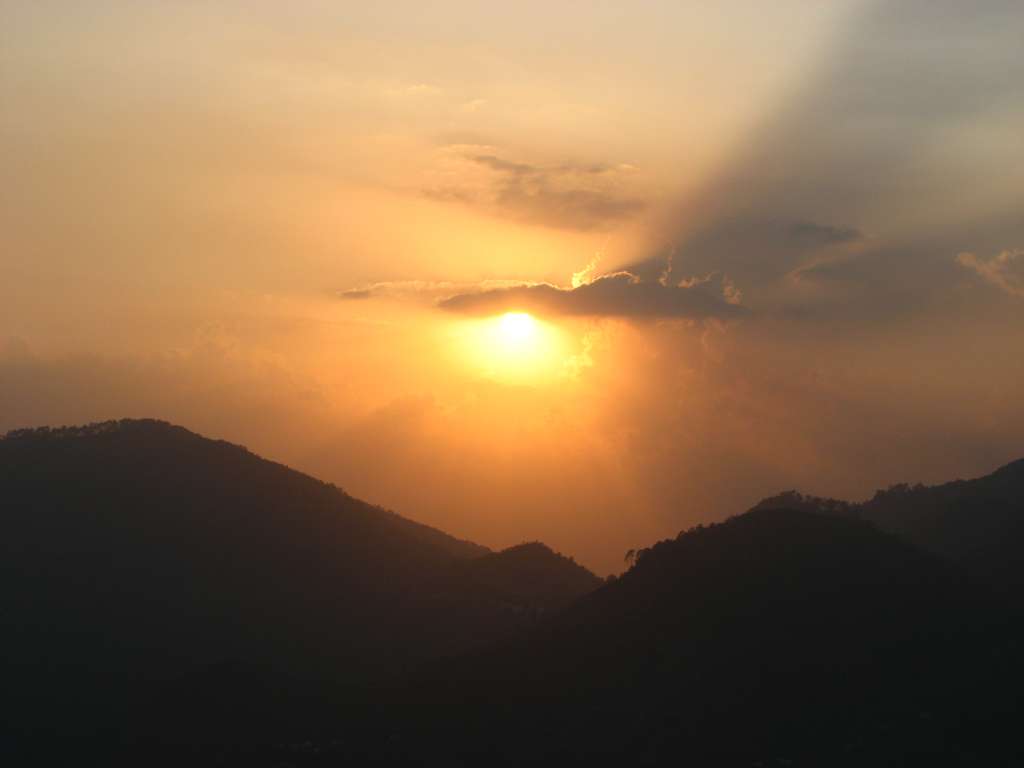
As we ascended the ghats we found the temperature magically dropping... clearly stated on the bold display in our Xylo’s DDIS... from high 40s to low 20s... in a span of 20kms... we were actually feeling a bit chill. Between enjoying the sunset over the mountains, navigating thru the weekend rush all over Nainital and enjoying the first rain in two weeks we made it to our 7th Mahindra Homestay destination Dr. Ranjit Bhargava's “The Hive”
After coming to the four lane Highway near Mount Abu, we cut off to SH 62 at Pindwara. Ask for the road to Binani cement factory and follow it for about 40 kms and you will reach Bera.
Baljeet, the cheerful owner of Castle Bera, and his brother have inherited this ancient heritage property known as “The Rawala”. Baljeet has air conditioned 5 rooms in his part of the castle and invites people “to experience the royal life in rural Rajasthan”.
Castle Bera has been playing host to “royalty, dignitaries from foreign countries and world renowned photographers” for a long time now... and as a homestay for 2-3 years now... but we were the first to come there from Mahindra Homestays.
Baljeet Singh is so detached, by choice, from the world here... he rarely watches the news... he probably reads the newspaper only for the cartoons. His only contact with the outside world is his cell phone.
But, how can one do business like this we ask him... “my son-in-law in Bangalore, reads and replies to my emails... so I get a call every time that there is a booking - works well for me!”
We reached Castle Bera after our drive thru rural Rajastan... filled with goats/sheep and shepherds with their brightly coloured turbans, at about 4pm and after a quick wash and some great chai... were off on our first drive - at that point we did not know it was a wildlife safari.
This safari was not in the middle of a reserve forest or anything... no wildlife warden... no permissions... no red-tape. The entire area is “revenue land - basically, agricultural land that may not be used for industrial or residential purposes".
Castle Bera is near the Jawai bandh (Dam). Built by Maharaja Umaid Singh of Jodhpur the dam covers an area of 500 sq. km and is the biggest dam in western Rajasthan.
This place is really in the middle of nowhere... the nearest town is probably Pali - some 30 kms away.
The safari started off with pleasantries and chatter as we drove thru the village... everyone in the village was getting up from their work... bowing, saluting our dear Baljeet Singh... and because we were in the same jeep with him, made us feel like royalty too!
The safari itself started with a fair amount of dirt-tracking and off-roading... and we got very excited with the few peacocks and peahens we saw flying as they tried to cross the road... Baljeet was not impressed... he was nonchalantly nodding his head... hmmmmm!!!
As we stopped next to a rocky hillock we realised why... the place was infested with peacocks and peahens... hundreds of them... all trying to walk up the hillside... to get to the peak... only to glide down... what a sight - felt like we were watching a scene from Jurassic Park!
The best part of the safari was yet to come... the man who was seated in the back of our jeep pulled out a searchlight and in 5 minutes pointed to a small pair of glowing eyes... a leopard. In the course of the next hour and half we watched open mouthed as the leopard yawned, stretched, walked... straight... towards us... coming close to 10 feet of our jeep!
Baljeet Singh’s regular safaris in this area have prevented poaching to a great extent. “They all know that I drive these roads almost everyday and any hanky-panky will not go un-noticed”, he said.
The next day, morning and evening safaris were just as exciting... flying Peacocks, herds of Nilgai, Pelicans, Crocodile, Geese, Storks, Robins, Cranes... and the usual spotted deer.
Interestingly, the Nilgai (blue-cow in Hindi) is not a cow/bull, but actually an antelope, the biggest in Asia. For some reason the locals believe it is a “distant cousin of the holy cow” and that has helped in conservation. Good for us!
Another interesting feature was the landscape itself - though these hills are a part of the Aravali range we could not help but notice that the smooth shape of the rocks looked like they were ‘carved’ by ocean currents. 15 minutes on Google and I found that there were enough theories and scientific proof that the entire Thar desert was believed to have been under water - during the Jurassic era. We had seen very similar caves near Bhopal, Madhyapradesh on our trip to Bhimbatika a few years ago.
Back at Castle Bera we were treated like royalty all the time... the rooms were plush, comfortable and well air conditioned... our large bathroom even had a fresco painting on the ceiling. Because we were there in the middle of summer when the average afternoon temperature was 49 Deg plus... we left the A/C “on” at all times on Baljeet's advice.
All the rooms were decorated with memorabilia and pictures from all over... of royalty... and everyone is related to everyone. When we stand in front of a picture (among the hundreds that dote the walls) we are introduced to everyone - “His Higness of Somewhere... or His Highness’ brother... or the present His Highness’ father....”.
I truly can’t remember the details of the interlinked family tree but I can tell you one thing... somehow they are all realated to (or decendents from) the one-and-only Maharana Pratap.
The food at Castle Bera was simple and royal... though we decided to have vegetarian food for most of our stay we were cajoled by Baljeet to “taste the local chicken - not the fake broiler chicken that you get in your cities... this is really tasty” - and he was right - it was the non-veg equivalent of organic vegetables!
Armed with precise directions from Baljeet, on how to get to Delhi (en route to our next stay at The Hive, Nainital) we head out to brave the heat of Rajasthan.
Driving from Nandan Farms of Sindhudurg in Maharashtra to Castle Bera near Pali in Rajasthan was an interesting journey of 5 days... not that a non-stop drive should take that long.. we planned it that way.
We first drove 380kms to Prabha's sister's place in Pune to do some laundry and relax for 2 days... and the drive on the Amboli Ghats was a delight. Being a part of the Deccan plateau and the western ghats whole area was beautiful and apparently it receives the highest rainfall in the western ghats.
We then drove to Nashik, relatively a short drive of 220kms, to visit the Mahindra Xylo plant - to see the place where our car was born. The road was being four laned in parts and so the drive took us almost 6 hours. The Ghat section just before Sangamner was very beautiful.
The visit to the Mahindra Xylo factory was very enlightening and we learnt that some 600 (colour, specifications and export special) variants of the Xylo and Scorpio are manufactured on the same conveyor belt. One brown Xylo rolls out... and right behind it is a white Scorpio... the precision with which the people work here is amazing.
Also the engineers at Mahindra have modified the software that drives the imported robots making them more efficient and as a result every 4 and half minutes one of these amazing vehicles comes off the conveyor belt.
We had the evening free so we took a trip to the Sula Vineyard. Got a look at the place were some of the best wines in india are made and got to taste a great wine made by their master winemaker Kerry Damskey called RaSa (named after Sula founder Rajeev Samant). Incidentally Rasa in sanskrit means juice or essence.
Sunset on the balcony with a beautiful view of the vineyards and the Gangapur lake in the distance made a great day even more romantic.
The next day we were off to Ahmedabad. The 500km drive took about 9 hours, but the beautiful part was that the roads improved tremendously as soon as we crossed the border from Maharashtra... almost instantly. At Valsad we joined the Golden Quadrilateral and then the road got even better... but the real treat was still to come...
It was too bloody hot to get out of the car and even think of eating lunch - so we decided to get some food from a dhaba parcelled and eat it in the car - hopefully under a tree if we could find one. The dhaba we found was just outside Surat and as I went in to order I noticed that it was run by some Muslims... and interestingly served pure vegetarian food.
I wonder if Chief Minister Narendra Modi had succeeded in converting Muslims to vegetarians or was it just business economics that had determined that the demand for non-veg food was not great in these areas.
When we reached Vadodra (Baroda) my hands started to itch... could not wait to drive on National Express-way #1 - the best road in the country.
We have driven on this road a couple of times before and each time the experience had been really great - total adrenaline rush. On this 100km stretch an average speed of 120+ was easily achievable - average speed... not top speed!
 But when we entered Amdavad (Ahmedabad) we were in for a rude shock. The cops stopped us and insisted that to drive in Amdavad, or anywhere in Gujrat for that matter, we should have a 'patti' on our headlight and if we did not have that we should pay a fine of 200 bucks. We tried explaining to them that we were tourists and we would be out of the city the next morning... no luck.
Finally we told him that we would get the great 'patti' (a anti-glare sticker on the right headlight) if he could point us to the closest sticker shop... and the enterprising cop Mr. H R Solanki pulled the 'patti' (sticker) out of a concealed pocket in this shirt and stuck it on our car... not before he collected 200 bucks for it.
Consoling ourselves that the 'speed-money' 200 bucks was worth it, because we hoped that, for the next 24 hrs that we were going the spend in Gujarat, we were not going to waste time arguing with cops.
Getting to Bera from Ahmedabad was a challenge in itself... normal everyday Gujratis would know that the best road to get here (from Ahmedabad) was the Mount Abu Road (via Mehsana-Sidhpur-Palanpur).
But we South Indians like us did not have any idea... we took the GQ (Golden Quadrilateral - NH 8) route and half way (at Himatnagar) had to deviate to the Ambaji road (SH 9) - consequently we got to drive thru a nice bit of rural Gujarat and Rajasthan, via Idar, Ambaji and Abu Road where we hit the nicely 4-laned NH 14.
Ambaji, as the name suggests is a 'holi place' and had all the ingredients of religious town... crowds of devotees, taxis and touts... but this also meant that we got some great food - a full fledged Gujrati Thali... theplas, kadi and kichdi included.
With the sun overhear scorching away at a merry 48+ deg we were headed to our sixth Mahindra Homestays destination, Castle Bera.